Low or unstable pressure is a common issue in screw air compressors. It can affect production efficiency, increase energy consumption, and even cause equipment downtime.
From our field experience, pressure loss is often not caused by a single fault,but by a combination of air leaks, component issues, or system mismatches.
In this guide, we’ll explain the most common causes of pressure loss and how to fix them quickly and effectively.
What Is Considered Low Pressure?
A screw air compressor is considered to have a pressure issue when:
- The system cannot reach the set pressure
- Pressure drops quickly during operation
- Output pressure is unstable
If your compressor frequently fails to maintain pressure, it’s time to troubleshoot.
Six Common Causes of Pressure Loss
1. Air Leaks in the System
Air leakage is one of the most common causes of pressure loss.
Typical leakage points:
• Pipe connections 、Valves 、Hoses 、Fittings
Solution:
• Inspect the entire pipeline
• Use leak detection methods (e.g., soap test or ultrasonic tools)
• Repair leaks immediately
Even small leaks can lead to significant pressure loss over time.
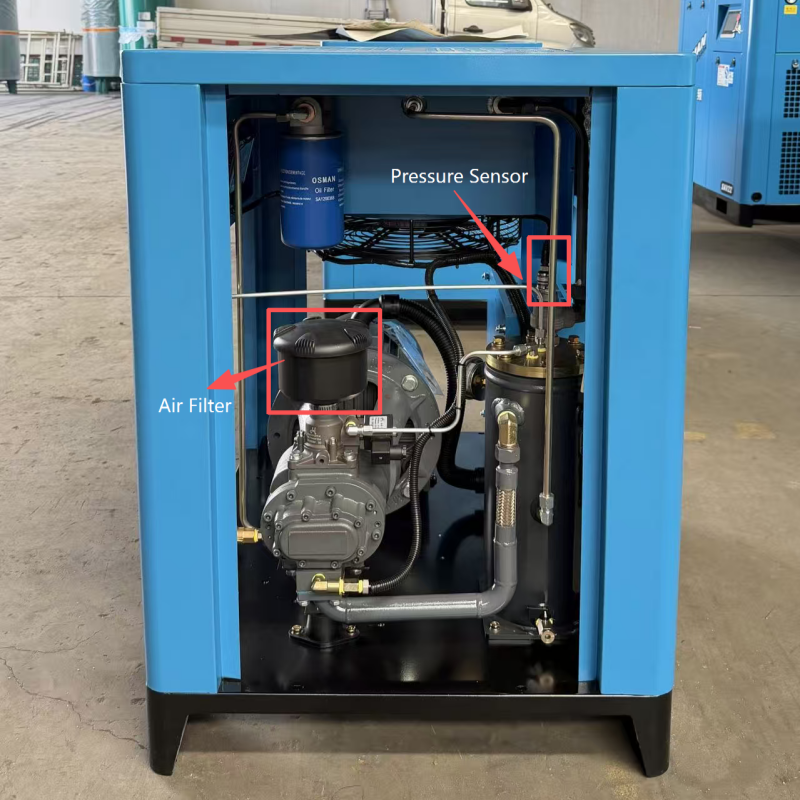
2. Clogged or Restricted Air Filter
A blocked air filter limits air intake.
Results:
• Reduced airflow 、Lower compressor output 、Pressure drop
Solution:
• Check and replace the air filter regularly
3. Insufficient Compressor Capacity
If air demand exceeds supply:
• Pressure will drop continuously
• Compressor runs at full load but cannot keep up
Solution:
• Evaluate air consumption
• Upgrade compressor or add additional units if necessary
4. Faulty Pressure Sensor or Control System
Incorrect sensor readings can cause improper operation.
Common issues:
• Sensor drift 、Signal errors 、Control system malfunction
Solution:
• Check 4–20 mA signal
• Calibrate or replace sensors
5. Intake Valve or Minimum Pressure Valve Problems
Valves play a key role in regulating pressure.
Possible problems:
• Intake valve not opening properly
• Minimum pressure valve stuck or leaking
Solution:
• Inspect valve condition
• Repair or replace faulty valves
6. Blocked Pipeline or Filters in the System
Restrictions in the air system can reduce pressure.
Examples:
• Clogged filters 、Narrow or damaged pipelines
Solution:
• Check system layout
• Clean or replace blocked components
Quick Troubleshooting Checklist
Follow this sequence to identify the issue:
- Check for air leaks
- Inspect air filter condition
- Verify compressor capacity vs demand
- Check sensors and control system
- Inspect valves
- Check pipeline restrictions
This approach helps locate the problem efficiently.
How to Prevent Pressure Loss:
✔ Regular Leak Inspection
Fixing leaks early can save energy and maintain stable pressure.
✔ Maintain Filters Properly
Clean or replace filters on schedule.
✔ Match Compressor Capacity to Demand
Avoid undersized systems.
✔ Maintain Control System Accuracy
Regular sensor calibration is essential.
FAQ :
Q1: What is the most common cause of pressure loss?
A: Air leaks in the system are the most common cause.
Q2: Why does pressure drop during peak usage?
A: Air demand may exceed compressor capacity.
Q3: Can a clogged filter cause pressure loss?
A: Yes, it restricts airflow and reduces output.
Q4: How do I detect air leaks quickly?
A: Use soap water for simple checks or ultrasonic leak detectors for precise detection.
Final Thoughts
Pressure stability is essential for efficient compressor operation. By identifying the root causes of pressure loss and maintaining key components, you can improve system performance and reduce unnecessary energy costs.
• For a complete maintenance guide, check our full article:
Screw Air Compressor Maintenance Guide
Need Help Solving Pressure Problems?
We provide:
- High-quality compressor spare parts
- Technical support
- Customized solutions for your system
• Contact us today to improve your compressor efficiency and performance.