

I. Cooling and heat dissipation system failure (most common)
1.Cooler clogging / scaling: Poor cooling water quality management leads to hard water. After long-term operation, scale forms on the inner wall of the cooling water pipes, acting like an "insulation layer" and hindering heat exchange.
Solution: It is recommended to install a water treatment device and perform regular chemical or physical cleaning.
2.Insufficient cooling water flow: Incomplete opening of inlet valves, clogging of pipeline filters, pump failure, pipeline blockage, or reduced heat exchange efficiency of the cooling tower.
Solution: Check whether valves are fully open, whether filters are clogged, and the operating status of the water pump.
3.High cooling water temperature: An undersized cooling tower results in excessive supply water temperature (normally required to be ≤32°C / 89.6°F), fan failure of the cooling tower, or severe scaling of the packing.
Solution: Inspect the cooling tower fan and water distributor, clean the packing, or consider upgrading the cooling tower capacity.
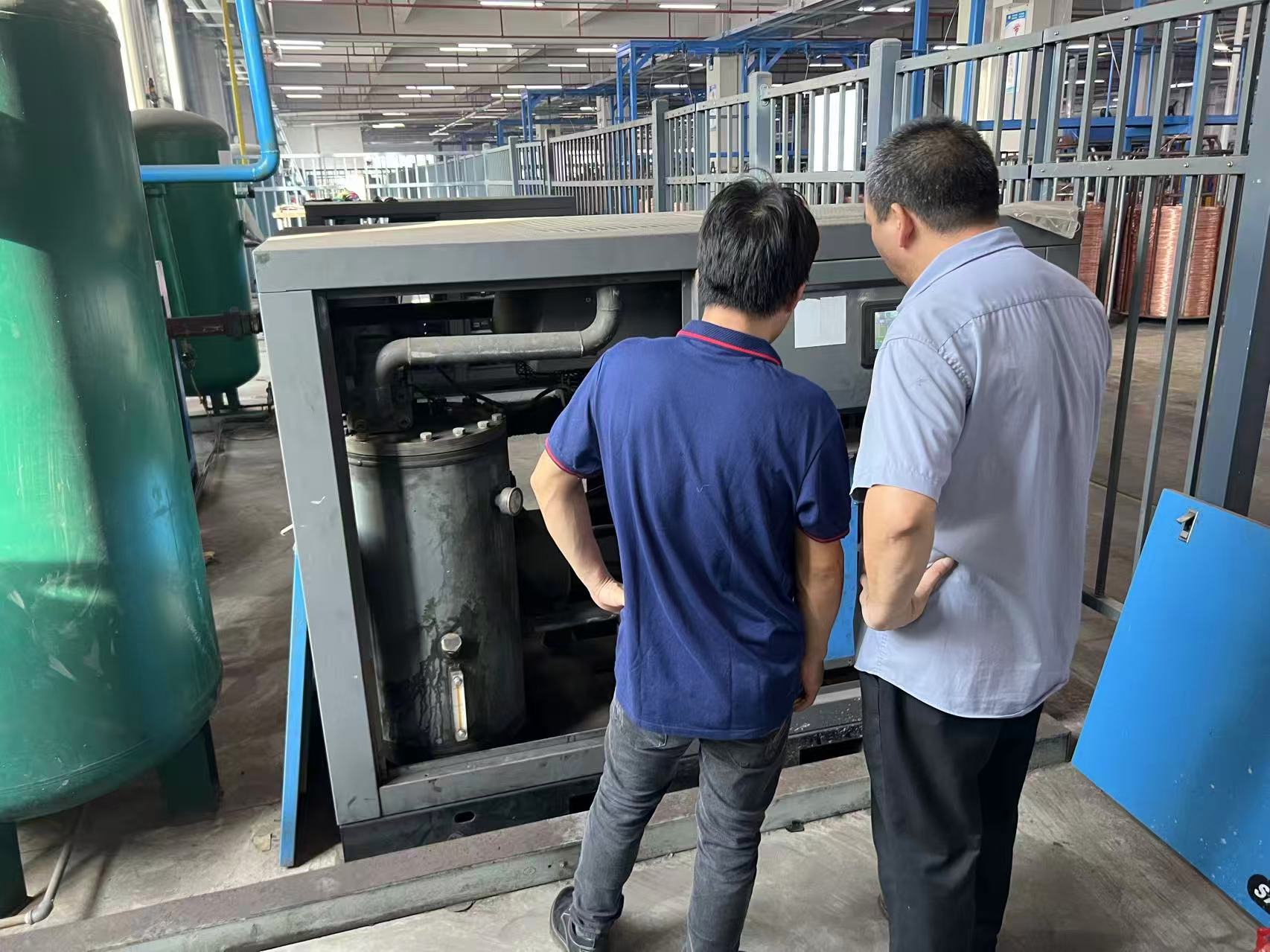
II. Problems with the lubricating oil system
1.Insufficient lubricating oil / low oil level:A shortage of lubricating oil reduces the circulating oil flow, resulting in decreased cooling capacity. This may be caused by oil leakage or normal consumption.
Solution: Shut down the compressor to check the oil level, top up the oil to the specified range, and inspect for leaks.
2.Aging, deterioration or improper selection of lubricating oil:Oil degradation or mixing: After exceeding its service life, the viscosity and oxidation stability of the oil deteriorate, leading to reduced cooling and lubrication performance and easy formation of coking and carbon deposits. Carbon deposits can block oil passages and radiators. Mixing oils of different brands or types may cause chemical reactions and produce sediments.
Solution: Replace the lubricating oil and oil filter strictly in accordance with the cycle and model specified by the manufacturer.
3.Oil Circuit Component Failure
- Clogged oil filter: Failure to replace it in a timely manner results in poor oil supply and reduced oil flow.
Solution: Perform maintenance on schedule and replace the oil filter.
- Thermostatic valve failure: The thermostatic valve is a key component that controls whether oil passes through the cooler. If the spool is stuck in the **bypass (non-cooling)** position, high-temperature oil circulates directly, causing a rapid rise in discharge temperature.
Solution: Inspect, clean or replace the thermostatic valve.
- Oil stop valve failure: Fails to open properly for oil supply during startup, or does not close tightly.
Solution: Overhaul or replace the oil stop valve.
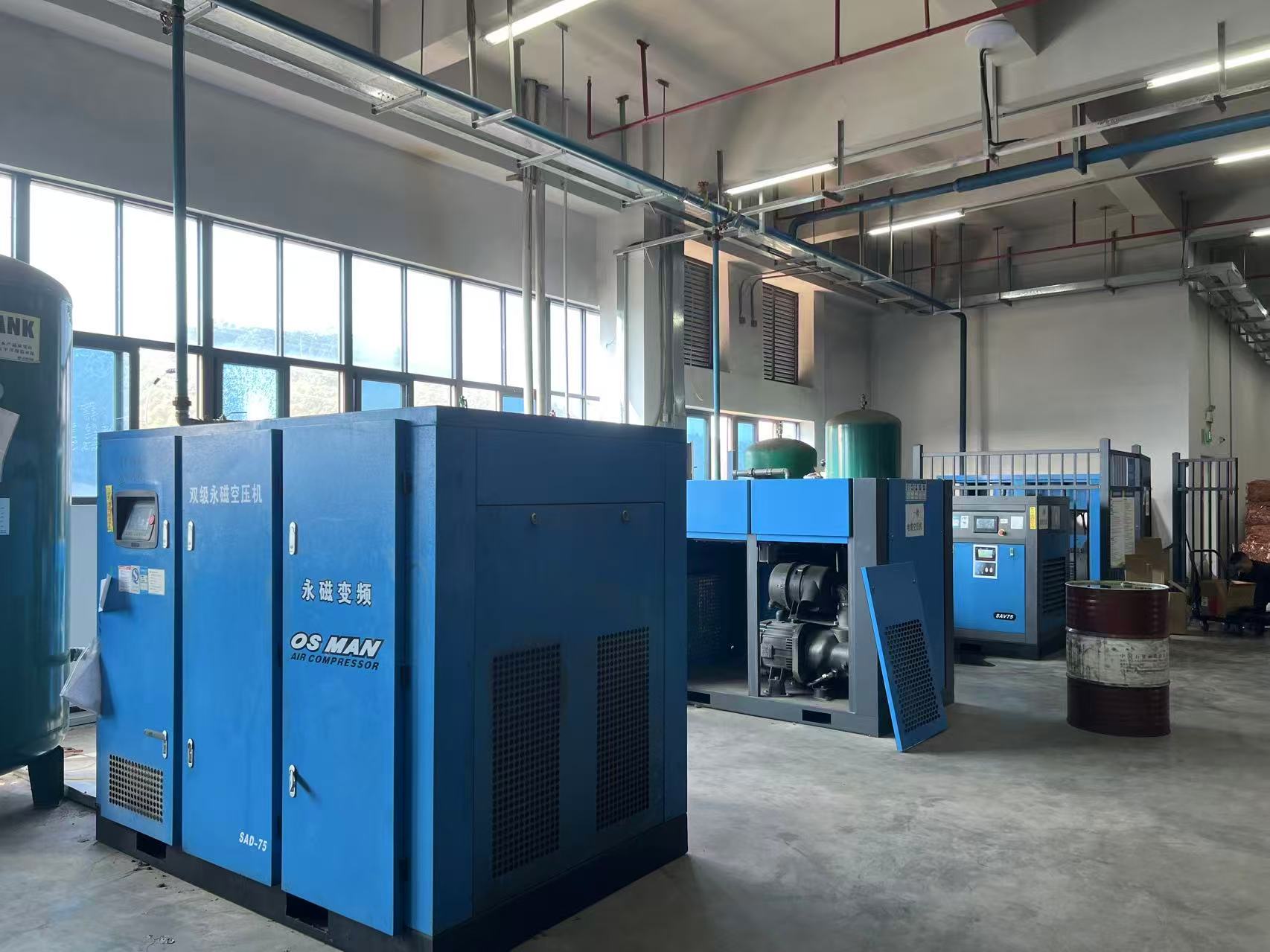
III. Equipment Operation and Mechanical Problems
- Wear of main unit / bearings: Increased clearances due to wear of rotors and bearings lead to more heat generated by mechanical friction, accompanied by abnormal noise and vibration.
Solution: Major overhaul of the air end by professional technicians required.
- Minimum pressure valve failure: This valve maintains the minimum system pressure to ensure proper circulation of lubricating oil. Malfunction may result in insufficient circulating pressure and poor oil flow.
Solution: Inspect and repair or replace.
- Clogged oil-gas separator (separator element): Excessive differential pressure across the separator element increases the load on the main unit and affects normal oil circulation and separation.
Solution: Replace the separator element in a timely manner when the differential pressure reaches the specified value (normally ≥ 0.8–1 bar).
- Long-term overloaded operation:
Continuous air consumption exceeding the compressor’s output leads to frequent loading/unloading or full-time loading, with heat generation exceeding the heat dissipation capacity.
Solution: Check for leaks at the air consumption end, or consider adding additional air compressors.
IV. Control and Sensor Issues
1. Malfunction of temperature sensor:
Failure of the sensor itself causes the displayed temperature to be higher than the actual temperature (false alarm).
Solution: Measure the actual temperature at the exhaust port with a contact thermometer or infrared thermometer, compare with the value shown on the control panel. Calibrate or replace the sensor.
2. Malfunction of ambient temperature sensor:
Affects the fan start-stop logic and may cause the cooling fan to fail to start.
Summary:
1. First observe: Check the discharge temperature, oil level, operating hours, loading rate on the control panel, and cooling water inlet/outlet temperature (for water-cooled compressors).
2. Then touch (caution: risk of scalding): Feel the temperature difference between inlet and outlet air of the cooler (for air-cooled compressors) or the temperature difference between inlet and outlet cooling water (for water-cooled compressors). A small temperature difference indicates poor heat dissipation.
3. Check maintenance records: Have the lubricating oil, oil filter, air filter, and oil-gas separator element reached their replacement intervals?
4. Inspect the environment: Is the machine room temperature too high? Is ventilation sufficient?