

Compressed air systems are generally installed in a compressor room. There are typically two scenarios: one is to install them in the same room as other equipment, and the other is to use a room specially designed for the compressed air system. In both cases, the room must meet certain requirements to facilitate compressor installation and operational efficiency.
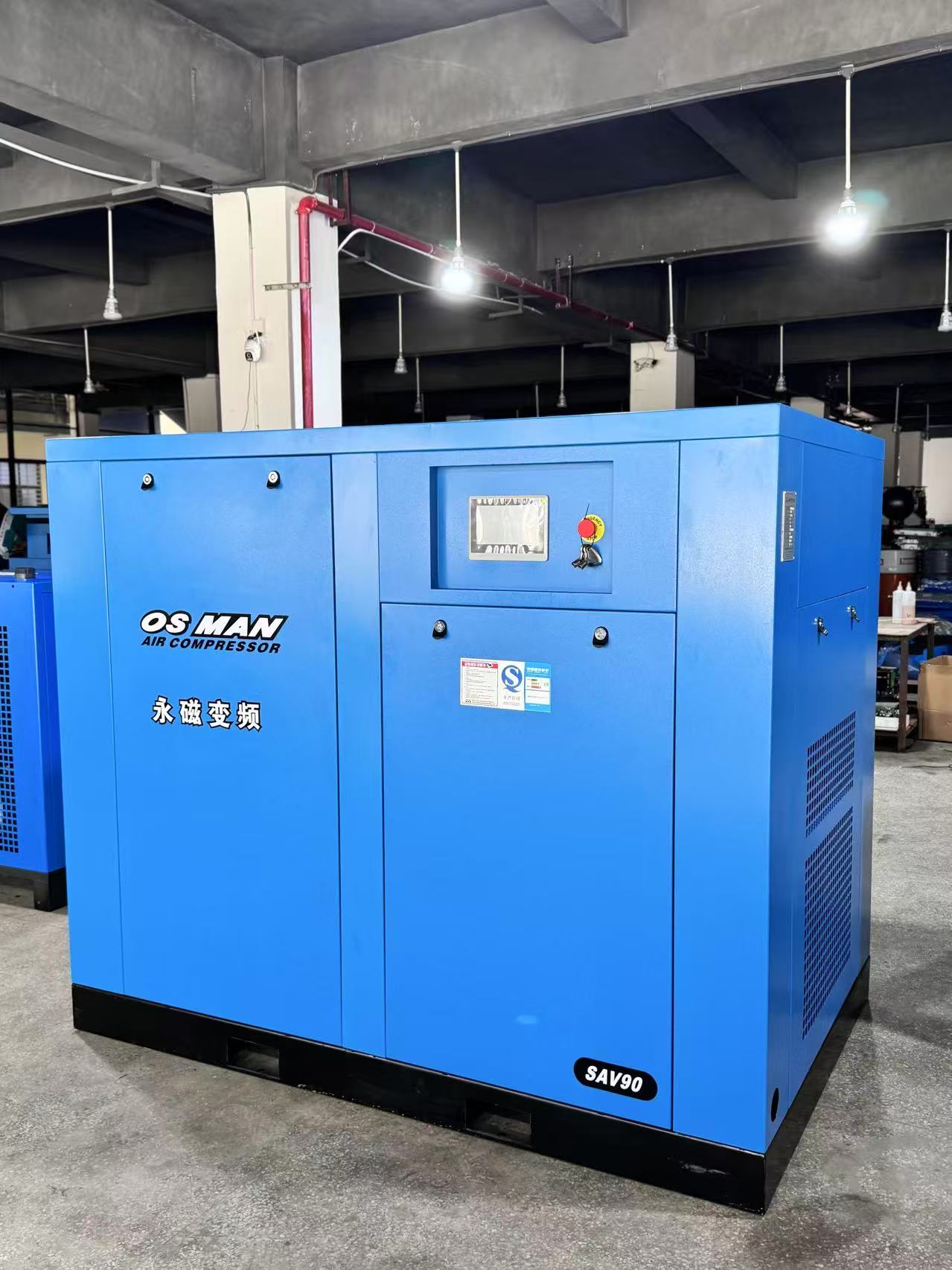
1. Where should the compressor be installed?
The primary rule for installing a air compressed air system is to arrange a dedicated compressor area. Experience has shown that centralization is almost always preferable across all industries.In addition, it provides better operating economy, a better-designed compressed air system,improved serviceability and user-friendliness, prevention of unauthorized access, proper noise control, and simpler options for controlled ventilation.
Secondly, separate areas in the factory used for other purposes may also be used for air compressor installation.Such installations should take into account certain risks and inconveniences, such as:disturbances caused by noise or the compressor’s ventilation requirements,physical risks and overheating risks,condensate drainage,hazardous environments (e.g. dust or flammable substances),corrosive substances in the air,space requirements for future expansion, and service accessibility.
However, installing the compressor in a workshop or warehouse can facilitate energy recovery.If no facilities are available for indoor installation, the compressor may also be installed outdoors under a roof.In this case, certain issues must be considered:
the risk of condensate freezing,protection of air intakes, suction openings and ventilation against rain and snow,the need for a solid, level foundation (asphalt, concrete slab or flat paved bed),risks from dust, flammable or corrosive substances,and protection against the ingress of other foreign objects.
2. Compressor Placement and Design
For installations of compressed air systems with long pipelines, distribution system routing shall be planned.
Installing compressed air equipment near auxiliary equipment such as pumps and fans facilitates repair and maintenance; boiler rooms are also a suitable location.
The building should be equipped with lifting equipment sized to handle the heaviest components in compressor installation (usually the electric motor), and allow for forklift access.It should also provide sufficient floor space for installing additional compressors for future expansion.In addition, the headroom must be adequate to hoist motors or similar equipment when required.
The compressed air installation shall be provided with floor drains or other facilities to handle condensate from compressors, aftercoolers, air tank, air dryer, etc.Floor drains must be installed in compliance with municipal regulations.
3. Room Infrastructure
Generally, only a level floor with sufficient load-bearing capacity is required for installing compressor equipment.In most cases, the equipment is integrated with anti-vibration features.
For new installation projects, each compressor unit is typically provided with a foundation frame to facilitate floor cleaning.
Large reciprocating compressors and centrifugal compressors may require a concrete slab foundation anchored to bedrock or a firm soil base.
In modern, complete compressor installations, the influence of externally generated vibration has been minimized.
For systems with centrifugal compressors, vibration suppression may be required for the compressor room foundation.
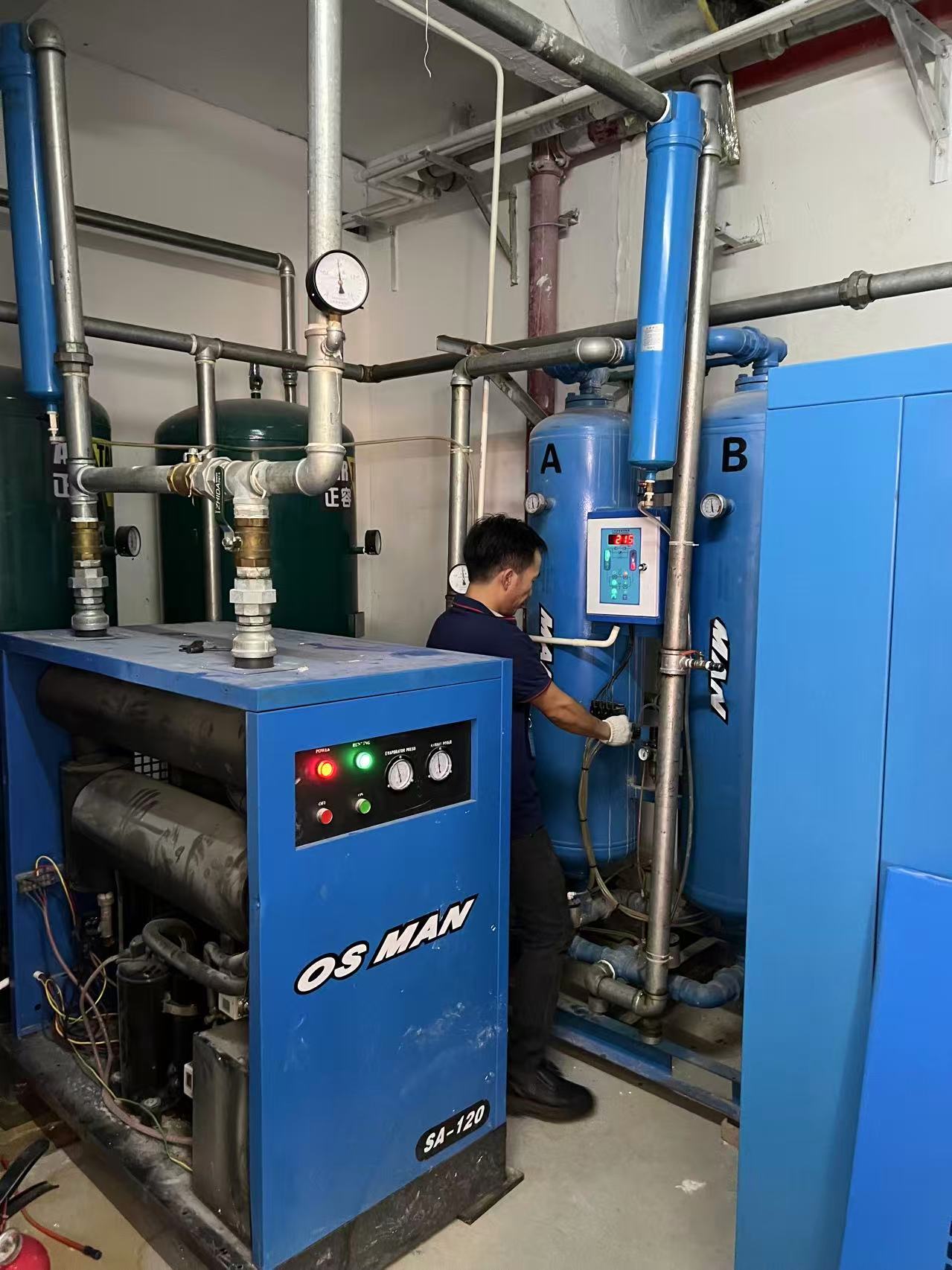
4. Air Intake
The compressor intake air must be clean and free from solid and gaseous contaminants.
Dust particles that cause abrasion and corrosive gases are particularly damaging.
Compressor air intakes are usually located at openings in the soundproof enclosure, but can also be remotely positioned in areas where air is as clean as possible.Air contaminated by vehicle exhaust, if mixed with intake air, can lead to serious consequences.
Pre-filters (cyclones, panel or band filters) shall be used in installations with high dust concentrations in the surrounding air.In such cases, the pressure drop caused by pre-filters must be considered during the design phase.
Keeping intake air cool is also beneficial.It is advisable to supply this air from outside the building to the compressor via separate ducting.It is important to use corrosion-resistant ducting with mesh screens at the inlet, which significantly reduces the risk of snow or rain being drawn into the compressor.It is also essential to use sufficiently large-diameter ducting to achieve the lowest possible pressure drop.
The design of intake ducting for reciprocating compressors is especially critical.Duct resonance caused by acoustic standing waves at the compressor’s cyclic pulsation frequency can damage ducting and the compressor, as well as affect the surroundings with irritating low-frequency noise.
5. Ventilation of the Room
Heat generated by the compressor in the compressor room can be removed through proper ventilation.The volume of ventilation air depends on the compressor size and cooling method.
Good ventilation must be maintained to keep the compressor room temperature within an appropriate range.A better approach to managing heat buildup is to **recover this thermal energy** for use within the building.
Ventilation air should be drawn from outside, preferably without long ductwork.
In addition, air intakes should be positioned as high as possible, while avoiding the risk of being covered by snow in winter.The risk of dust, explosive and corrosive substances entering the compressor room must also be considered.
Ventilation fans / exhaust fans should be installed high on the wall at one end of the compressor room, with air intakes on the opposite wall.Air velocity at ventilation openings should not exceed **4 m/s**.Thermostatically controlled fans are most suitable for this purpose.These fans must be sized to handle pressure drops caused by ducts, external wall louvers, and other components.The ventilation air volume must be sufficient to limit the temperature rise inside the room to **7–10°C**.If heat dissipation through room ventilation is insufficient, a water-cooled compressor should be considered.