

When investing in an industrial compressed air system, one of the biggest calls you'll make is choosing between a Fixed Speed and a Variable Speed Drive (VSD) rotary screw compressor.
While both rely on the exact same screw compression element, how they run is completely different:
- Fixed Speed: The motor runs at a constant RPM full-time, regardless of how much air you're actually using.
- VSD: Acts like an accelerator pedal—it automatically throttles the motor speed up or down to match real-time demand.
So, which one wins out? There's no single "better" option here—it really comes down to fit:
- Fixed Speed shines in steady, 24/7 continuous operations with flat air demand. It offers lower upfront capital costs and proven, straightforward reliability.
- VSD is built for fluctuating air loads (shifts, variable production lines, batch processing). By eliminating wasteful unload running hours, it cuts operating power costs significantly over time.
Your choice ultimately hinges on air demand patterns, operating hours, and total cost of ownership goals.
Here is a practical breakdown of how both technologies compare, where each fits best, and how to make the right choice for your facility:
1. What Is a Fixed Speed Screw Air Compressor?
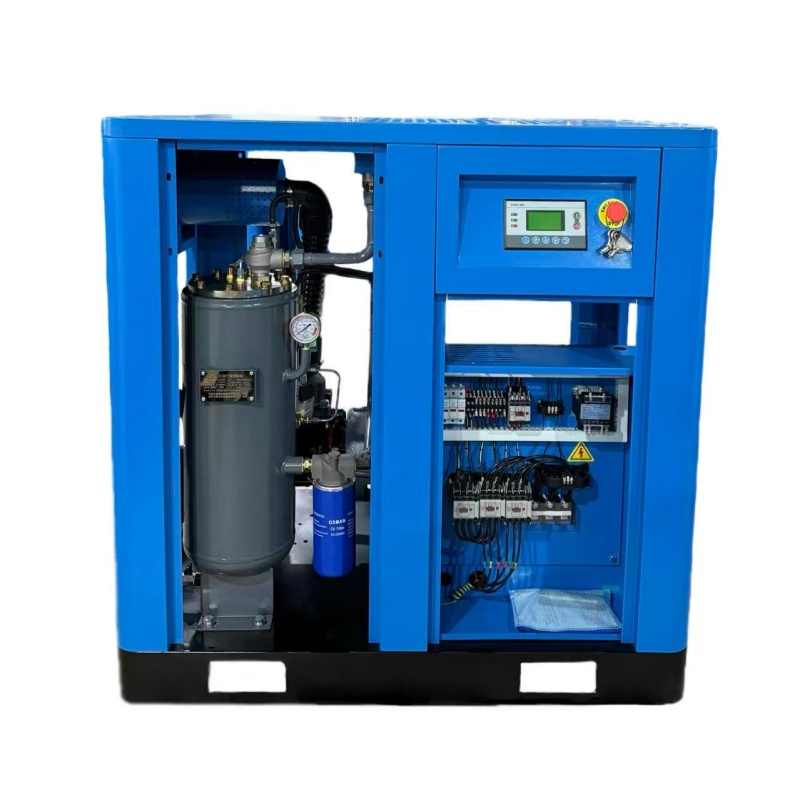
A fixed speed screw air compressor operates with a motor running at a constant speed. When compressed air demand increases, the compressor loads and produces air. When demand decreases, the compressor unloads but the motor speed remains unchanged.
This technology has been widely used in industrial applications for many years due to its simple structure, reliable performance, and relatively low purchase cost.
Advantages of Fixed Speed Screw Compressor
(1)Lower Initial Investment
Compared with VSD models, fixed speed compressors usually have a lower purchase price, making them attractive for companies with limited initial budgets.
(2)Simple Structure
Because there is no variable frequency drive system, fixed speed compressors have fewer electronic components and are generally easier to maintain.
(3)Stable Performance
For applications where air demand remains constant throughout the production process, fixed speed compressors can provide stable and reliable compressed air.
(4)Suitable Applications
Fixed speed screw compressors make the most financial and operational sense for:
- Continuous manufacturing with a flat, predictable air load
- Full-capacity production lines running near 100% duty cycle
- Process industries requiring baseline pressure and flow
- Intermittent operations with limited annual running hours
2. What Is a VSD Screw Air Compressor?
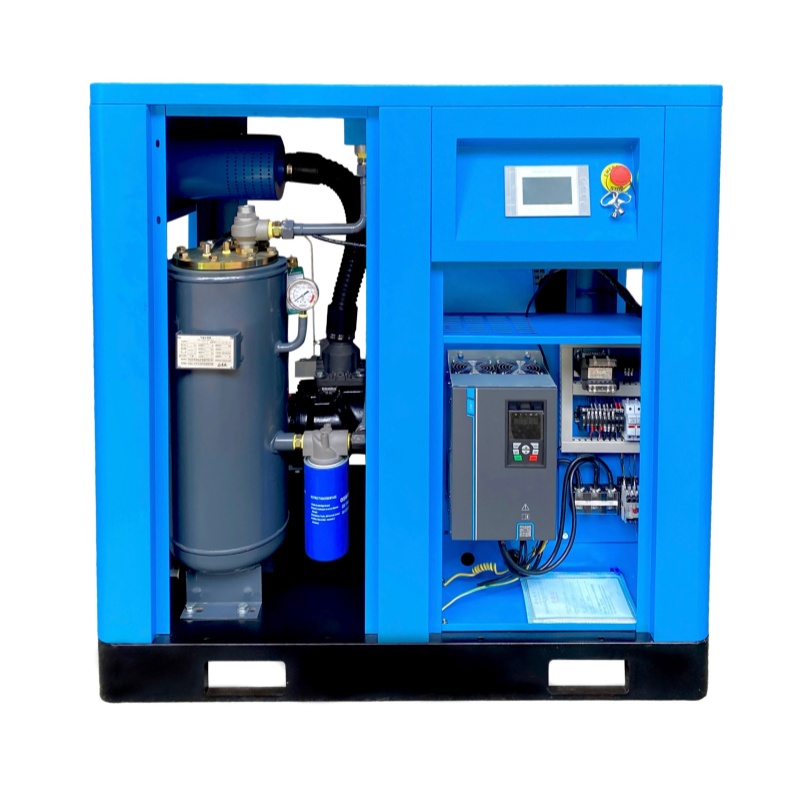
A Variable Speed Drive (VSD) screw air compressor uses an inverter to control motor speed according to actual compressed air demand.
Instead of running continuously at full speed, the compressor automatically adjusts output to match system requirements.
For example:
- High air demand → motor speed increases
- Low air demand → motor speed decreases
This allows the compressor to avoid unnecessary energy consumption during periods of reduced demand.
Advantages of VSD Screw Compressor
(1)Energy Saving
Energy efficiency is the biggest advantage of VSD technology. Since the motor speed changes according to demand, the compressor avoids wasting electricity during low-load operation.
For factories operating many hours per year, energy savings can significantly reduce total operating costs.
(2)Stable Pressure Control
VSD compressors maintain more consistent system pressure by adjusting output automatically.
This helps:
- Improve production stability
- Reduce pressure fluctuations
- Protect pneumatic equipment
(3)Reduced Mechanical Stress
Because VSD compressors can start and stop more smoothly, they reduce mechanical stress on motors and other components.
(4)Suitable Applications
VSD screw compressors are ideal for:
- Factories with changing air demand
- Multiple-shift production facilities
- Applications with frequent load changes
- Companies focusing on energy efficiency
OSMAN's permanent magnet VSD screw air compressors are designed for high-efficiency industrial applications, helping customers reduce energy costs while maintaining reliable compressed air supply.
3. Fixed Speed vs VSD Screw Air Compressor: Key Differences
| Comparison | Fixed Speed Screw Air Compressor | VSD Screw Air Compressor |
| Motor Speed | Constant speed | Variable speed |
| Initial Cost | Lower | Higher |
| Pressure Stability | Normal | More stable |
| Maintenance Complexity | Simple | More advanced |
| Suitable Demand | Stable air consumption | Changing air consumption |
The main difference is how the compressor responds to changes in air consumption.
A fixed speed compressor is most efficient when operating close to full load.
A VSD compressor performs better when air demand changes throughout the day.
4. Which Compressor Is Suitable for Your Application?
Choose a Fixed Speed Screw Compressor If:
You may consider a fixed speed compressor when:
- Air demand is stable
- Production runs continuously
- The compressor operates close to full load
- Initial investment is the main concern
Examples:
- Large production lines
- Continuous manufacturing processes
- Applications with predictable air consumption
Choose a VSD Screw Compressor If:
A VSD compressor is recommended when:
- Air demand changes frequently
- Multiple machines operate at different times
- Energy efficiency is a priority
- The compressor runs many hours per year
Examples:
- Automotive manufacturing
- Electronics factories
- CNC machining
- Packaging industries
- Textile production
FAQ
Q1:Is a VSD screw compressor better than a fixed speed compressor?
A:Not always. A VSD compressor is better for applications with variable air demand, while a fixed speed compressor can be more suitable for stable and continuous air consumption.
Q2:Are VSD compressors more expensive to maintain?
A:VSD compressors have more advanced electrical components, but proper maintenance and professional service can ensure reliable long-term operation.
Q3:Can I replace a fixed speed compressor with a VSD compressor?
A:Yes, but the compressor size, air demand, pressure requirements, and electrical system should be evaluated before replacement
Final Thoughts
The Bottom Line
Neither technology is universally superior—the right call comes down to your load profile and operating hours.
- Fixed Speed delivers low upfront cost and solid reliability for flat, predictable air loads.
- VSD slashes long-term power bills for dynamic, fluctuating air demands.
Recommendation: Run a quick air audit before buying. Matching the compressor to your actual duty cycle is the single fastest way to secure low total cost of ownership and uninterrupted uptime.