

When selecting an industrial screw air compressor, one of the most common questions buyers ask is whether a single stage or two stage screw compressor is the better choice.
Both compressor types use rotary screw technology to produce compressed air, but they differ significantly in compression method, energy efficiency, discharge temperature, and long-term operating costs.
A single stage compressor compresses air once to the target pressure, making it a reliable and economical solution for many general industrial applications. A two stage compressor divides the compression process into two steps, improving efficiency, reducing heat generation, and delivering greater performance under demanding operating conditions.
Choosing the right compressor depends on more than just purchase price. Factors such as operating hours, required pressure, energy consumption, and production demands all play an important role.
This guide compares single stage and two stage screw compressors to help you determine which solution best suits your business.
1. What Is a Single Stage Screw Compressor?
A single stage screw compressor completes the entire compression process in one stage. Ambient air enters the air end and is compressed directly to the required discharge pressure before being delivered to the compressed air system.
This design is widely used because it is simple, reliable, and cost-effective.
For many factories operating at standard pressures such as 7 bar, 8 bar, or 10 bar, a single stage compressor provides sufficient performance while keeping maintenance straightforward.
Advantages:
- Lower purchase cost
- Simple mechanical structure
- Easy maintenance
- Reliable operation
- Suitable for most industrial applications
Typical Applications:
Single stage screw compressors are commonly used in:
Metal fabrication 、Furniture manufacturing 、Textile factories 、Packaging plants 、General manufacturing 、Automotive repair workshops
For businesses with moderate compressed air demand and stable production schedules, a single stage compressor is often the most economical option.

2. What Is a Two Stage Screw Compressor?
A two stage screw compressor compresses air in two separate stages instead of one.
After the first compression stage, the air passes through an intercooler where part of the compression heat is removed. The cooled air then enters the second-stage airend for final compression.
By dividing the compression process into two steps, the compressor operates more efficiently and generates less heat.
This design reduces energy loss and allows the compressor to achieve higher efficiency, especially during continuous operation.
Advantages:
- Higher compression efficiency
- Lower discharge temperature
- Reduced energy consumption
- Improved rotor efficiency
- Longer airend service life
- Better performance under heavy-duty operation
Typical Applications:
Two stage screw compressors are widely used in:
Steel manufacturing 、Mining 、Cement plants 、Electronics manufacturing 、Food processing 、Pharmaceutical production 、Large industrial facilities operating 24/7
Because these industries consume large volumes of compressed air, the improved efficiency of a two stage compressor often leads to significant long-term savings.
3. Energy Efficiency Comparison
Electricity is the largest operating cost for most industrial air compressors. Even a small improvement in efficiency can lead to substantial savings over the life of the equipment.
A single stage compressor requires the air end to perform the entire compression process at once. This generates more heat, and higher temperatures reduce compression efficiency.
In a two stage compressor, the air is cooled between compression stages. Lower air temperature means lower compression resistance, allowing the compressor to produce the same amount of compressed air with less energy.
For facilities operating continuously or running multiple production shifts, this efficiency improvement can translate into lower electricity costs over many years.
Although a two stage compressor requires a higher initial investment, the reduction in energy consumption often provides a better return on investment for high-demand applications.
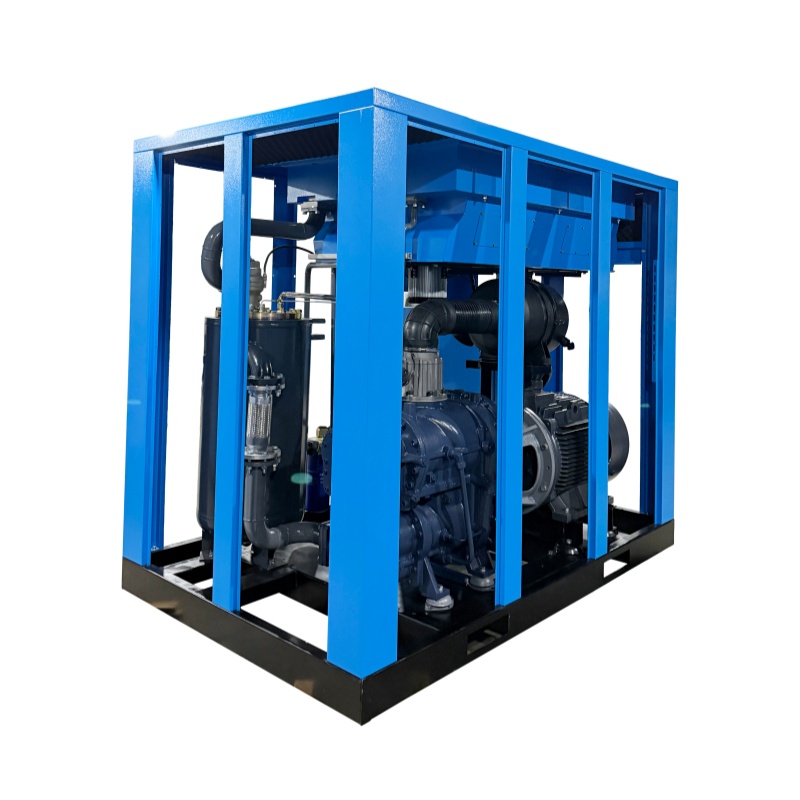
4. Performance and Operating Costs
When comparing compressors, buyers should evaluate both purchase price and lifetime operating costs.
A single stage compressor generally offers:
- Lower purchase price
- Lower installation cost
- Easier maintenance
- Lower initial investment
A two stage compressor offers:
- Lower electricity consumption
- Higher airflow efficiency
- Lower operating temperature
- Better long-term reliability
- Reduced total cost of ownership in continuous production
For companies operating one shift with stable air demand, a single stage compressor is often sufficient.
For factories operating 16–24 hours per day, a two stage compressor may provide better long-term value despite its higher purchase price.
5. Which Compressor Is Right for Your Industry?
Choose a Single Stage Screw Compressor If:
A single stage compressor is a practical choice when:
- Your air demand is moderate.
- Production runs for one shift or limited hours.
- Budget is an important consideration.
- Operating pressure is typically between 7–10 bar.
- Energy costs are not the primary concern.
Typical industries include:
Furniture manufacturing 、Printing 、Garment production 、Automotive workshops 、Small and medium-sized factories
Choose a Two Stage Screw Compressor If:
A two stage compressor is recommended when:
- Your factory operates continuously.
- Compressed air demand is high.
- Electricity costs represent a significant operating expense.
- You require maximum energy efficiency.
- Long-term operating cost is more important than initial purchase price.
Typical industries include:
Steel processing 、Mining 、Chemical plants 、Electronics manufacturing 、Pharmaceutical production 、Food and beverage processing
For these applications, a two stage compressor can provide greater efficiency and improved reliability over many years of operation.
7. Common Buying Mistakes
(1)Choosing Only by Purchase Price
A lower purchase price may seem attractive, but operating costs often exceed the initial investment over the compressor's lifetime.
(2)Ignoring Operating Hours
The longer a compressor runs each day, the more important energy efficiency becomes.
(3)Oversizing or Undersizing the Compressor
Selecting a compressor that does not match your actual air demand can reduce efficiency and increase operating costs.
Focusing Only on Motor Power
Motor power alone does not determine compressor performance. Buyers should also compare:Free Air Delivery (FAD)、Working pressure、Specific energy consumption、Air end design、Motor efficiency
FAQ:
Q1:Is a two stage screw compressor more efficient than a single stage compressor?
A:Yes. Two stage compressors generally achieve higher compression efficiency because the air is cooled between compression stages, reducing heat and energy loss.
Q2:Is a two stage compressor worth the higher purchase price?
A:For factories with continuous operation or high compressed air demand, the lower energy consumption can offset the higher initial investment over time.
Q3:Does a two stage compressor require more maintenance?
A:Maintenance procedures are similar, although a two stage compressor has a more complex internal design. Following the manufacturer's maintenance schedule will help ensure reliable performance.
Q4:Which compressor is better for small factories?
A:In many small and medium-sized factories with moderate air demand, a single stage screw compressor provides an excellent balance of cost, performance, and reliability.
Final Thoughts
Both single- and two-stage screw compressors have their place. Your choice comes down to duty cycle, air demand, and energy goals.
Single-stage: Best for general manufacturing and moderate, intermittent loads.
Two-stage: Superior for high-demand, continuous industrial operation—saving significant power over time.
Assess your actual airflow needs, operating hours, and growth plans before buying. Right-sizing your compressor upfront pays off in lower energy bills and higher uptime.