The screw air compressor industry is moving in a clear direction: machines are getting more efficient, more intelligent, and cleaner. For buyers and distributors around the world, understanding where the market is headed helps in making better purchasing decisions. Here are the trends we see from the manufacturing side.
Energy efficiency is now the baseline, not a premium
The biggest shift in recent years is the move from fixed-speed to variable-speed drive (VSD) compressors. A fixed-speed machine runs at full output whenever it is on, regardless of demand. A VSD compressor — especially one with a permanent-magnet motor — adjusts its speed to match the air actually being used. For most factories where demand goes up and down through the day, this alone cuts energy consumption by roughly a third.
As a result, high-efficiency machines have moved from being a premium option to the default choice in many markets. Buyers now routinely ask about specific power and energy class before they ask about price.
What we see on the ground in Southeast Asia and Latin America
We export mainly to Vietnam, where we work with a local distributor, with growing demand from the Philippines, Brazil, and Thailand. Three patterns stand out:
Energy price is the first topic. Factory owners in Vietnam and Thailand run compressors long hours, and electricity cost decides the machine choice more than anything else. PM VSD machines sell well for this reason.
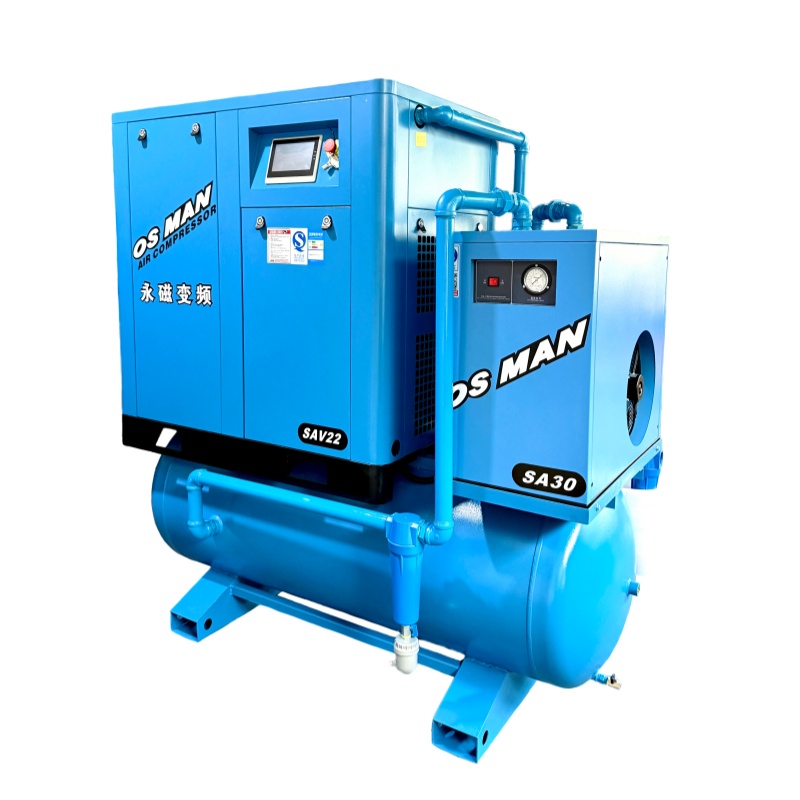
Complete packages are replacing bare machines. Buyers increasingly ask for compressor + dryer + receiver tank + filters as one package, so they do not have to source air treatment separately. Our cable customer in Vietnam ordered three 37 kW PM VSD units with dryers and precision filters, not just three bare compressors.
Distributors reorder. A trading partner in the Philippines bought two units first, then came back for three more — repeat orders are the clearest sign a machine family performs in the field.
Oil-free compressors are growing fast
More industries are requiring oil-free compressed air. Food and beverage, pharmaceuticals, electronics, and semiconductor manufacturing all need air that will not contaminate the product or process. This is pushing demand for oil-free screw compressors, which use different sealing and cooling designs to deliver clean air without oil in the compression chamber.
Two-stage compression is finding a wider audience
For higher-pressure or continuous-duty applications, two-stage compression — compressing the air in two steps with intercooling in between — can reduce energy use by a meaningful margin compared with a single-stage machine. It is a practical option for plants that run their compressors around the clock.
Intelligence and monitoring
Compressors are increasingly shipped with controllers that log operating data, flag faults before they cause downtime, and support remote monitoring. For a factory manager, this means fewer surprises and better-planned maintenance.
The practical takeaway for buyers
The technology gap between "premium" and "mid-range" compressors has narrowed significantly. What matters most now is matching the machine to the actual demand — airflow, pressure, duty cycle, and air quality — rather than choosing by brand name alone. If you are sourcing compressors for a project or a distribution business, we would be glad to walk you through the selection process and help you compare options on total cost of ownership rather than sticker price.