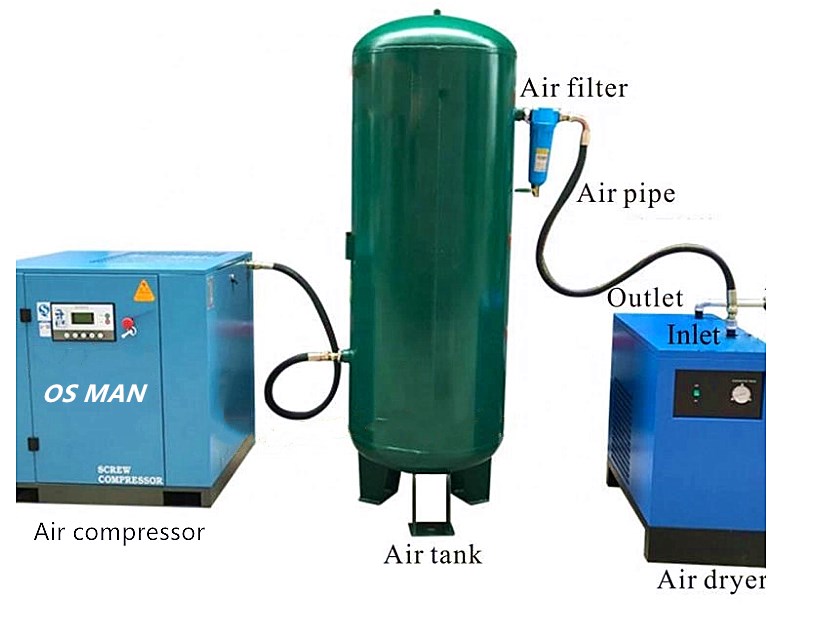
A screw air compressor is a workhorse of the modern factory — it supplies the compressed air that runs pneumatic tools, drives automated machinery, and powers processes across manufacturing, construction, and energy. Get the selection and operation right, and it runs quietly in the background for years. Get it wrong, and you pay for it every month in wasted electricity and unplanned downtime. This guide walks through how the machine works, the mistakes buyers most often make, and a few practical ways to cut energy costs.
How a screw air compressor produces compressed air
The core of a screw compressor is a pair of intermeshing rotors — one male, one female — turning inside a casing. As they rotate, the space between the rotors and the casing changes volume in three stages:
1. Intake. As the rotors turn, a gap opens at the inlet, drawing air in through the intake valve.
2. Compression. The rotors continue turning, the trapped pocket gets smaller, and the air inside is squeezed to a higher pressure and temperature.
3. Discharge. When the air reaches the set pressure, the discharge valve opens and the compressed air moves on to the dryer and filters before reaching the production line.
Because there is no reciprocating piston, a screw compressor runs smoother and quieter than a piston machine of the same size.
One number matters more than most when comparing machines: specific power — how much electricity is consumed per unit of compressed air delivered, usually expressed in kW per m³/min. Lower is better. A well-designed energy-saving model typically runs at a specific power below about 6.0 kW/(m³/min).
Three selection mistakes to avoid
Mistake 1 — buying more airflow than you need. Oversizing means the machine spends most of its time unloaded, which still burns electricity. Undersizing means pressure sags when demand peaks. The right approach is to add up the actual air consumption of your equipment, then add a 10–15% margin.
Mistake 2 — ignoring air quality and working conditions. Different industries need different air. Food and pharmaceutical plants need oil-free compressors to avoid contaminating product. Hot, dusty sites such as mines need machines with a higher protection rating (IP54 or above) and effective cooling and dust protection.
Mistake 3 — looking only at purchase price. Over the life of a compressor, energy and maintenance costs dwarf the initial price — typically more than 70% of total cost of ownership. It is usually worth paying a little more upfront for a higher-efficiency machine with quality rotors and a good motor.
Where the real savings come from
Choose variable speed (VSD) for variable demand. A fixed-speed compressor runs at full speed whether you need the air or not. A permanent-magnet VSD compressor slows down when demand drops, and the savings add up quickly — often 30–40% compared with a fixed-speed machine on a fluctuating load.
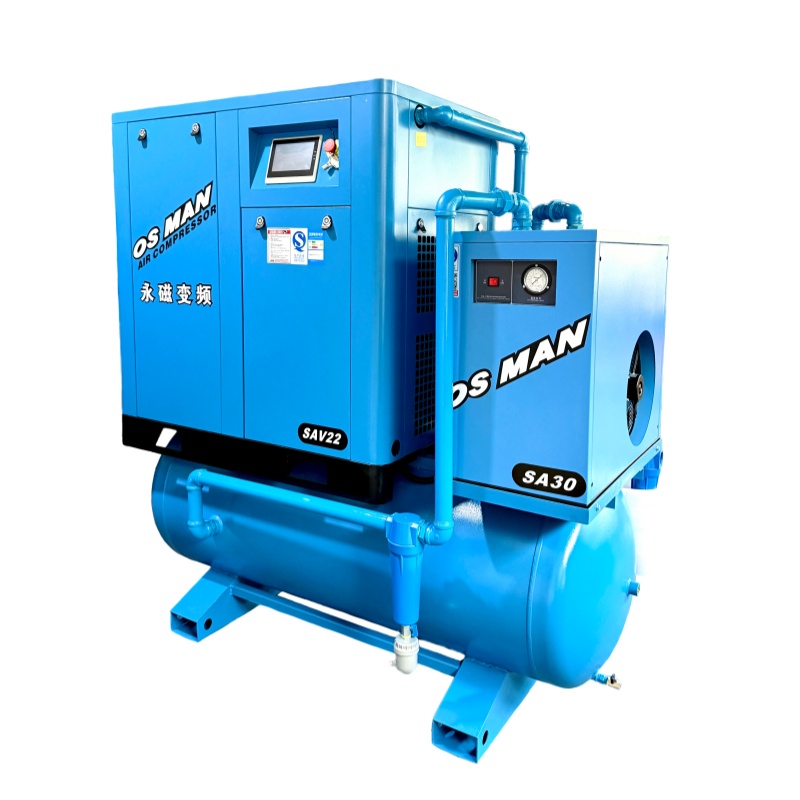
This is not just theory. A toy factory in Mexico runs a 75 kW PM VSD machine with a refrigerated dryer, air receiver tank, and precision filters as a complete package, and their production line draws air in bursts rather than steadily — exactly the kind of load where variable speed pays for itself.
Keep pressure as low as your process allows. Every 1 bar of unnecessary pressure adds roughly 7–8% to energy consumption. Set the working pressure to what your tools actually need (commonly around 7–8 bar for general industrial use), and fix air leaks — a 10% reduction in leakage typically saves 5–10% on energy.
Maintain the basics. A clogged air filter increases intake resistance and can push energy consumption up by more than 10%. Old oil accelerates rotor wear. Regular filter and oil changes are the cheapest efficiency measure you can take.
What small businesses should look at first
For a small workshop, a single integrated unit — compressor, dryer, receiver tank, and filters in one package — is often the simplest route to clean, dry air without a separate treatment room. A trading partner in the Philippines started with one 22 kW and one 37 kW PM VSD unit, then came back for three more 7.5 kW integrated permanent-magnet compressors — the repeat order came because the first machines did what they promised in a modest space.
Bottom line
A screw air compressor is a long-term asset. Selecting the right size for the job, keeping the pressure sensible, and staying on top of maintenance will do more for your energy bill than almost anything else. If you are sizing a system or reviewing an existing one, we are happy to help you work through the numbers.