

CFM and pressure ratings usually steal the spotlight, but heat management is just as crucial when choosing a screw air compressor.
Air-cooled models are plug-and-play and cost-effective for standard setups. Water-cooled units handle severe heat loads in harsh environments, but require water infrastructure.
Choosing the wrong design leads to soaring power bills and costly downtime. Below, we break down which cooling system fits your plant best.
1、How Air-Cooled Screw Compressors Work
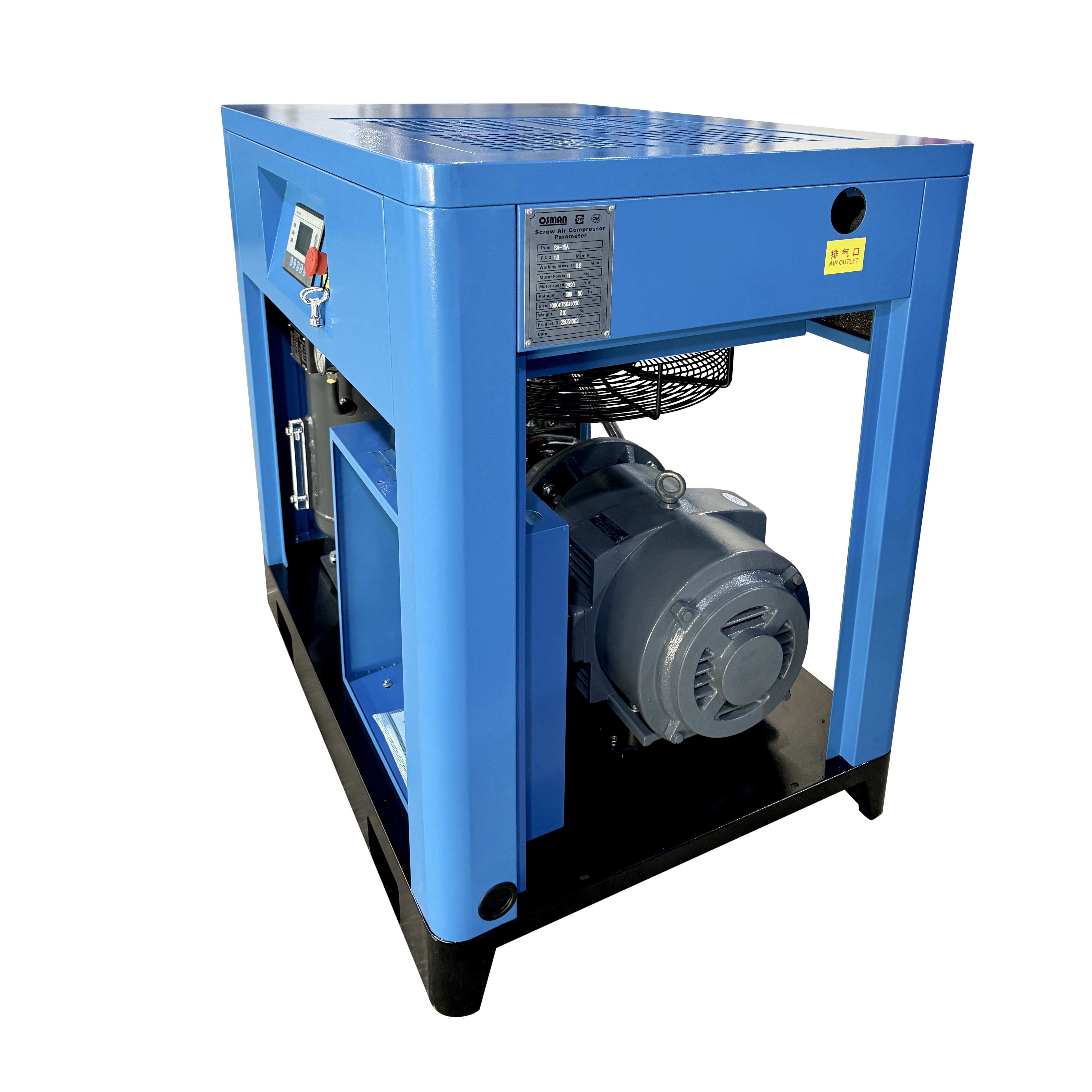
Air-cooled compressors handle heat dissipation through forced air circulation. Internal fans pull ambient air across the oil cooler and aftercooler, venting thermal energy straight out of the cabinet. Without the need for external water lines or cooling towers, these units offer a clean, self-contained, and plug-and-play setup.
Key Advantages
- Lower Upfront & Installation Costs: No cooling towers, pumps, or specialized piping required—just connect power and discharge piping.
- Simplified Maintenance: Eliminates water-side scaling, chemical treatment, and pump servicing, keeping ongoing upkeep straightforward.
- High Versatility: An ideal fit for the vast majority of standard manufacturing and processing facilities.
Where Air-Cooled Units Fall Short
Because cooling efficiency relies entirely on intake air, performance fluctuates with room conditions. In high-ambient environments (above 40°C/104°F), poorly ventilated compressor rooms, or dusty plants, thermal load can spike—increasing the risk of high-temp shutdowns. Maintaining proper ventilation and ducting is mandatory.
Best-Fit Applications
Air-cooled units dominate general industrial operations where utility infrastructure is minimal, such as metal fabrication, automotive service centers, packaging plants, furniture production, and mid-sized manufacturing facilities.
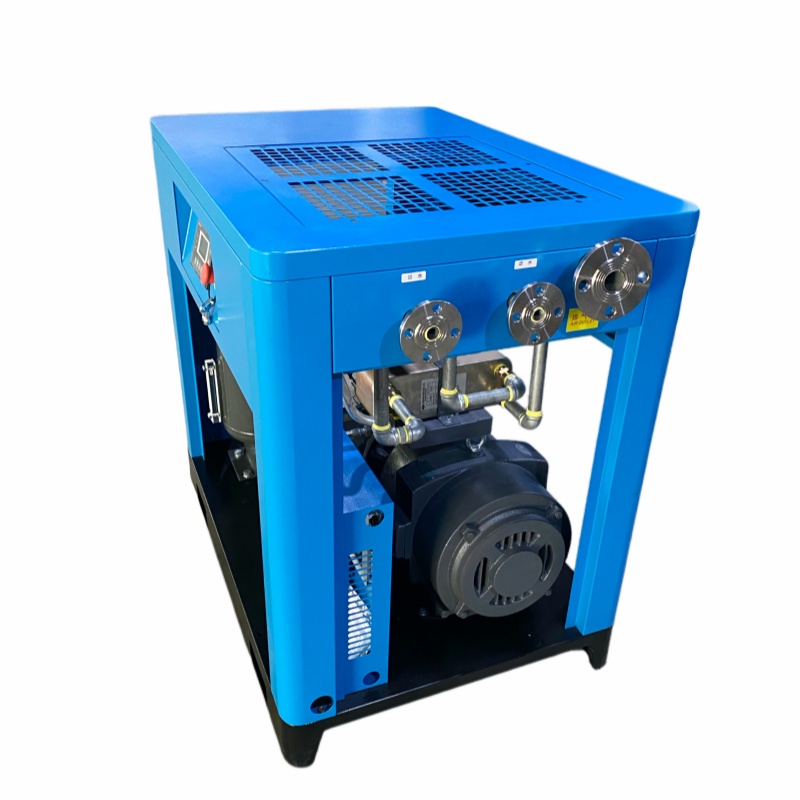
2. What Is a Water-Cooled Screw Compressor?
Water-cooled screw compressors manage thermal loads by circulating cooling water through shell-and-tube or plate heat exchangers. The water absorbs heat directly from the compressor's oil and compressed air, then routes to an external cooling tower, chiller, or plant cooling loop before recirculating.
Because water has a significantly higher thermal capacity than air, these systems provide exceptionally stable heat rejection regardless of ambient room conditions.
Key Advantages
- Unmatched Thermal Stability: Delivers lower, more consistent operating and air discharge temperatures—even during peak summer loads.
- Immunity to Ambient Conditions: High room temperatures, airborne dust, and poor plant ventilation won't compromise cooling performance.
- Engineered for Continuous Duty: Built to handle 24/7 heavy-duty industrial cycles where thermal shutdown is not an option.
- Heat Recovery Potential: Warm return water can often be integrated into facility heat-recovery systems for extra energy savings.
Where Water-Cooled Units Fall Short The tradeoff comes in higher upfront complexity. Water-cooled setups demand dedicated infrastructure—including pumps, piping, and cooling towers. Additionally, water quality management is non-negotiable; untreated water leads to scaling, fouling, and corrosion inside the heat exchanger, which steadily degrades efficiency over time.
Best-Fit Applications
Water-cooled units are the industry standard for high-horsepower installations, hot environments, and continuous heavy industrial processes, such as:
- Heavy Industries: Steel mills, cement plants, foundries, and mining operations.
- Process Industries: Chemical processing, refineries, and power generation facilities.
- Large Manufacturing: High-demand, multi-shift production plants requiring maximum reliability.
3. Installation Requirements: What Your Facility Needs
Before committing to a cooling design, you need to conduct a thorough audit of your plant’s physical footprint and utility availability. The installation requirements for these two systems are vastly different.
Installing Air-Cooled Systems: Focus on Airflow & Room Ducting Air-cooled compressors are often labeled "plug-and-play," but they still require a well-planned room layout to avoid thermal recirculation.
- Ventilation Capacity: The compressor room must handle substantial airflow. High-CFM exhaust fans or direct heat-rejection ductwork are usually required to prevent hot air from recycling back into the air intake.
- Clearance & Spacing: Maintain at least 3 to 5 feet of clear space around the unit for unrestricted intake and easier access during cooler coil maintenance.
- Ambient Environment: Keep the room clean and dry. Heavy dust or oil mist will quickly coat the cooling fins, drastically reducing thermal exchange efficiency and forcing high-temp trips.
Installing Water-Cooled Systems: Focus on Utility Infrastructure Water-cooled setups shift the burden from room air movement to fluid infrastructure.
- Water Source & Flow Rates: You need a dependable, pressure-stable cooling water supply (via a cooling tower, chiller, or open-loop system) matched to the compressor’s GPM (gallons per minute) specification.
- Water Treatment Infrastructure: Installing online filtration, chemical dosing, or water softening systems is essential. Unmonitored hard water leads to rapid scale deposits inside heat exchangers, choking off water flow.
- Piping & Pump Capacity: Account for dedicated supply/return piping, circulation pumps, and pressure gauges to continuously monitor loop integrity.
4. Energy Efficiency & Thermal Performance
Cooling design directly impacts compressor power consumption. Excess heat drops air density, accelerates oil breakdown, and spikes the energy required to deliver the same CFM output.
- Air-Cooled: Highly efficient in moderate climates (below 35°C / 95°F) with good ventilation. However, summer heat spikes rapidly degrade cooling performance, driving up power bills and risking thermal trips.
- Water-Cooled: Maintains a steady, low operating temperature regardless of room conditions. This preserves oil viscosity and keeps volumetric efficiency at peak levels during continuous 24/7 runs.
The Net Energy Takeaway: Water-cooled systems require auxiliary power for cooling towers and pumps. However, for high-horsepower installations operating continuously, the compressor’s energy savings far outweigh these additional utility loads.
5. Maintenance Comparison
Routine maintenance is essential regardless of the cooling method, but the maintenance focus differs.
Air-Cooled Compressor Maintenance Regular tasks include:
Cleaning cooling fins、Removing dust from the cooler、Checking cooling fan operation、Ensuring adequate ventilation
Dust buildup is one of the most common causes of overheating in air-cooled compressors.
Water-Cooled Compressor Maintenance、Maintenance typically includes:
Checking water quality、Removing scale from heat exchangers、Inspecting cooling water pipes、Monitoring water flow、Preventing corrosion and leakage
Proper water treatment significantly extends the life of the cooling system.
6. Common Buying Mistakes to Avoid
1. Fixating on the Upfront Price Tag Alone Focusing solely on the purchase price is a classic mistake. Over a 10-year lifespan, electricity and maintenance account for up to 80% of a compressor's Total Cost of Ownership (TCO). A lower purchase price on an air-cooled unit can easily be wiped out by runaway energy bills during summer heat spikes.
2. Ignoring Local Climate Extremes Installing an air-cooled compressor in a geographic area where summer ambient temperatures routinely exceed 40°C (104°F) is a recipe for frequent high-temp shutdowns. Local seasonal weather patterns must dictate your cooling choice—not just average yearly temperatures.
3. Underestimating Water Treatment & Upkeep Water-cooled units offer phenomenal performance, but they are not "set and forget." Buyers often overlook the ongoing need for chemical water treatment and heat exchanger descaling. Neglecting water quality will quickly turn a highly efficient system into an energy-hogging bottleneck.
Frequently Asked Questions (FAQ)
Q1: Is an air-cooled screw compressor better than a water-cooled compressor?
A: Neither is inherently superior—the right choice depends entirely on your operating conditions. Air-cooled compressors offer a lower upfront investment and a simpler, "plug-and-play" installation. Water-cooled compressors excel in heavy-duty industrial environments, hot climates, or tightly enclosed spaces where ambient heat dissipation is a challenge.
Q2: Do water-cooled compressors save energy compared to air-cooled models?
A: In large-horsepower, continuous 24/7 applications or high-ambient environments, yes. Water-cooled systems maintain lower, more stable operating temperatures, which preserves volumetric efficiency and reduces energy draw. However, to calculate true Total Cost of Ownership (TCO), you must factor in the auxiliary power used by cooling tower fans and water pumps.
Q3: Which compressor cooling system requires less maintenance?
A: Air-cooled compressors require significantly less maintenance because they eliminate fluid loops. Upkeep mainly involves blowing dust off the cooling fins and replacing intake filters. Water-cooled units demand ongoing water quality monitoring, chemical anti-scaling treatments, and periodic heat exchanger descaling to prevent thermal throttling.